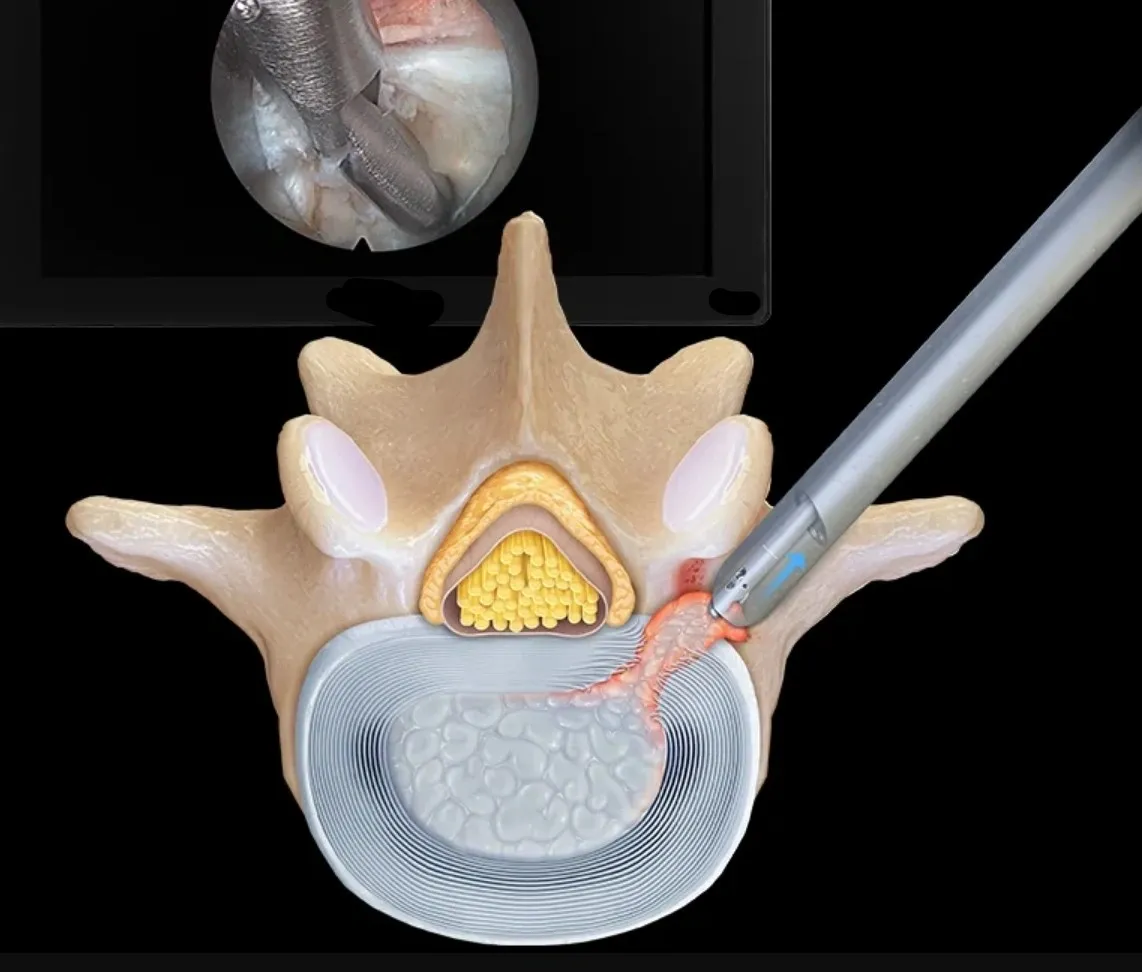
Endoscopic Spine Surgery – Minimally Invasive Spine Treatment
Endoscopic Spine Surgery is a modern, minimally invasive technique used to treat various spinal conditions with precision and minimal tissue damage. Using a thin tube (endoscope) with a high-definition camera, a neurosurgeon can access and treat spinal problems through very small incisions.
Endoscopic spine surgery involves inserting a small camera and specialized instruments through tiny incisions to visualize and treat spinal conditions. It allows the surgeon to operate with high accuracy while preserving surrounding muscles and tissues.
Conditions Treated with Endoscopic Spine Surgery
This technique is commonly used to treat:
- Herniated or slipped discs
- Lumbar and cervical disc bulge
- Sciatica (nerve compression)
- Spinal stenosis
- Degenerative disc disease
- Some spinal infections and cysts
Common Endoscopic Spine Procedures
1. Endoscopic Discectomy
Removal of herniated disc material pressing on nerves.
2. Endoscopic Decompression
Relieves pressure on spinal nerves caused by stenosis.
3. Endoscopic Foraminotomy
Enlarges the nerve exit pathway to reduce compression.
Advanced Technologies Used
Modern neurosurgeons use:
- High-definition endoscopic cameras
- Real-time imaging (fluoroscopy)
- Neuronavigation systems
- Microsurgical instruments
- Laser-assisted techniques
Benefits of Endoscopic Spine Surgery
- Minimally invasive (small incisions)
- Less muscle damage
- Reduced pain and blood loss
- Faster recovery and early mobility
- Shorter hospital stay (often same-day discharge)
- Minimal scarring
Risks of Endoscopic Spine Surgery
Although safe, potential risks include:
- Infection
- Bleeding
- Nerve irritation or injury
- Recurrence of disc problem
- Incomplete relief (rare cases)
Choosing an experienced neurosurgeon minimizes these risks.
Recovery After Endoscopic Spine Surgery
- Hospital stay: Same day or 1 day
- Walking: Within hours after surgery
- Return to work: 1–3 weeks
- Full recovery: 4–6 weeks
Who is a Candidate?
You may be suitable for endoscopic spine surgery if:
- You have persistent back or neck pain
- Symptoms do not improve with medication or physiotherapy
- There is confirmed nerve compression on MRI
- You prefer minimally invasive treatment options
Why Choose an Experienced Neurosurgeon?
A skilled neurosurgeon ensures:
- Accurate diagnosis and case selection
- Advanced minimally invasive techniques
- Better surgical precision
- Faster recovery and improved outcomes