Epilepsy Surgery – Advanced Treatment for Seizure Control
Epilepsy surgery is a specialized procedure designed to control or eliminate seizures in patients who do not respond to medications. For individuals with drug-resistant epilepsy, surgery offers a safe and effective option to improve quality of life.
An experienced neurosurgeon uses advanced brain-mapping technologies and precision techniques to identify and treat the exact source of seizures while preserving normal brain function.
Epilepsy is a neurological disorder characterized by recurrent, unprovoked seizures caused by abnormal electrical activity in the brain. While many patients respond to medications, some continue to experience seizures despite treatment.
When is Epilepsy Surgery Recommended?
Surgery may be recommended when:
- Seizures are not controlled with medications (drug-resistant epilepsy)
- The seizure focus is clearly identified in the brain
- Seizures significantly affect daily life
- The benefits of surgery outweigh potential risks
Types of Epilepsy Surgery
- Resective Surgery
Removal of the part of the brain where seizures originate (commonly temporal lobe). - Laser Interstitial Thermal Therapy (LITT)
A minimally invasive procedure that uses heat to destroy seizure-causing tissue. - Corpus Callosotomy
A procedure that cuts connections between brain hemispheres to reduce seizure spread. - Vagus Nerve Stimulation (VNS)
A device is implanted to send electrical signals to control seizures. - Responsive Neurostimulation (RNS)
A smart device detects abnormal activity and delivers targeted stimulation to stop seizures.
Advanced Technologies Used
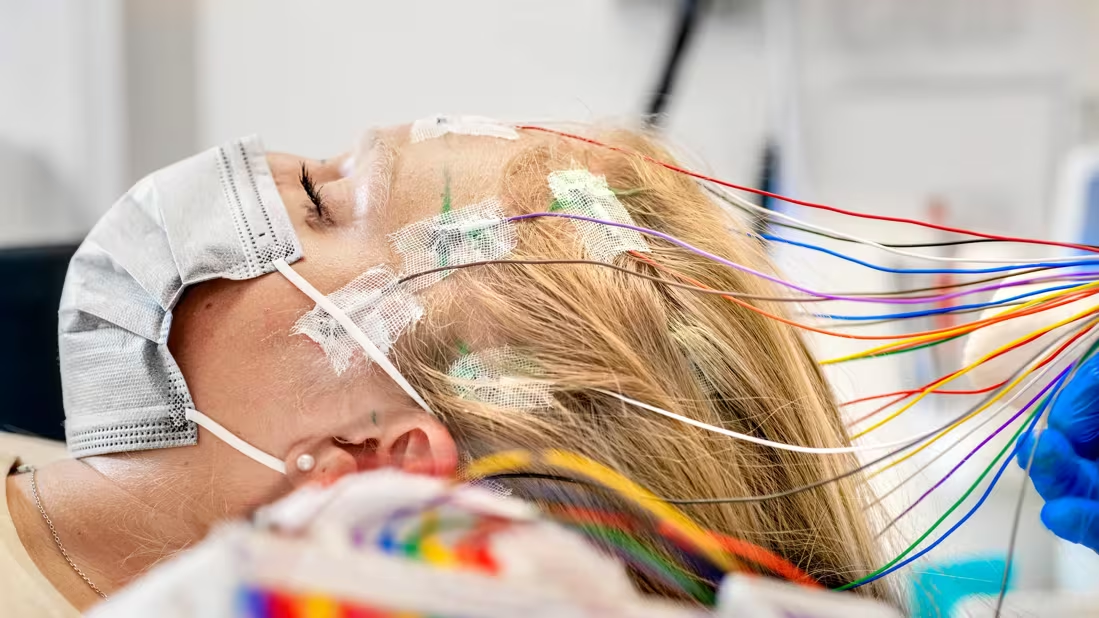
- Video EEG monitoring
- MRI and functional MRI (fMRI)
- PET and SPECT scans
- Brain mapping and neuronavigation
- Intraoperative monitoring
Benefits of Epilepsy Surgery
- Significant reduction or complete control of seizures
- Reduced dependence on medications
- Improved cognitive and physical function
- Better quality of life
- Increased independence
Risks of Epilepsy Surgery
Like any brain surgery, risks may include:
- Infection
- Bleeding
- Memory or speech difficulties
- Neurological deficits
- Recurrence of seizures
These risks are minimized when surgery is performed by an experienced neurosurgeon.
Recovery After Epilepsy Surgery
- Hospital stay: 3–7 days
- Initial recovery: 2–4 weeks
- Full recovery: Several weeks to months
Follow-up care and rehabilitation may be required for optimal results.
Why Choose an Experienced Neurosurgeon?
A skilled neurosurgeon ensures:
- Accurate seizure focus identification
- Advanced surgical precision
- Personalized treatment planning
- Higher success rates and safer outcomes